42 label the following diagram of water molecules
Water Cycle Diagram - Science Struck This may seem a bit confusing, but a look at the diagram provided below, which highlights each step of the water cycle, will make things pretty clear. Evaporation Evaporation is the process wherein any liquid (water) turns to a gaseous state (water vapor) due to an underlying factor acting upon it, and gradually disappears in the atmosphere. Unit 1: Atoms and Molecules - Douglas College Human Anatomy ... Draw a diagram of a single water molecule. Clearly label any: Oxygen atoms; Hydrogen atoms; Covalent bonds; Draw an annotated diagram showing two, and only two, water molecules. In your diagram you should include all the labels shown above, then add explanatory labels identifying and fully describing the following important chemical properties:
A Diagram Of Water Cycle with Detailed Explanations - BYJUS Below is a well labelled and easy diagram of water cycle for your better understanding. Diagram Of Water Cycle Stages of Water Cycle The complete water cycle is carried into four stages which are as follows: Evaporation, Condensation, Precipitation and Collection. Evaporation This is the initial stage of the water cycle.
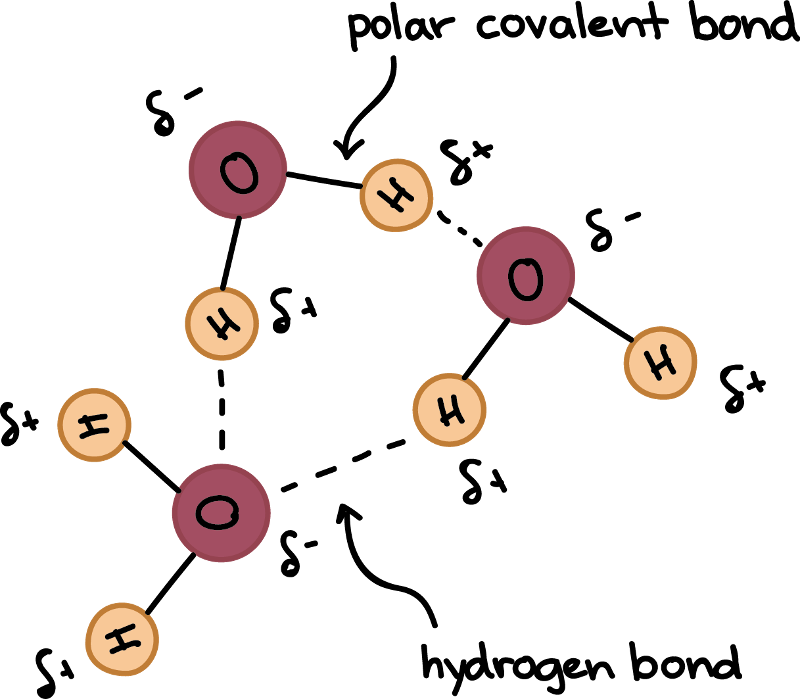
Label the following diagram of water molecules
What potential energy diagram shows? - Brainly.com The potential energy diagram shows the gain and loss of potential energy as water molecules decompose into hydrogen and oxygen with label parts is attached below.. What potential energy diagram shows? Potential energy diagram of any reaction tells about the change of potential energy throughout the reaction.. In the question some labels are provided to us, so lets we discuss about them in brief: PDF 6.1 Osmosis and diffusion powerpoint - rochellepark.org Place the following labels in the diagram: high concentration, low concentration, and an arrow showing the direction that the molecules would travel before equilibrium is reached. The video clip explains that you can also look at water as moving to a _____ 2. Osmosis is a type of diffusion, but it involves the movement of water. Mastering BSC1010: Chapter 3 Flashcards | Quizlet Label the following diagram of water molecules, indicating the location of bonds and the partial charges on the atoms. Properties of water Classify each statement as an example of adhesion, cohesion, or surface tension Adhesion: Water molecules cling to the side of a breaker. Water molecules cling to plant cell walls.
Label the following diagram of water molecules. Water: Molecular Structure of Water (With Diagram) The Water (H 2 O) molecule has a triangular geometry with O-H bond distance of 0.0965nm and the H-O-H bond angle is 104.5°. Although the water as a whole is electrically neutral, it behaves as an electrical dipole. This is because; oxygen atom is more electronegative than the hydrogen atoms, so it attracts electrons away from the hydrogen nuclei. Answered: Label the diagrams of cells using the… | bartleby Transcribed Image Text: Label the diagrams of cells using the following terms: diffusion, active transport, osmosis, equilibrium. The arrows show the direction of transport. You may use the terms more than oncel High CO2 levels 8 H2O molecules, 25 glucose molecules 2 H20 molecules Low CO2 levels glucose molecule High protein levels 10 HzO 2 H20 ... Solved Water molecules (H_2O) can form hydrogen bonds - Chegg Hydrogen bonding Label the following diagram of water molecules, indicating the location of bonds and the partial charges on the atoms. Drag the labels to their appropriate locations on the diagram of the Question: Water molecules (H_2O) can form hydrogen bonds because of their molecular structure. How do we draw the dipole moment of a water molecule? We start by looking at a water molecule: As we can see, the 2 hydrogen atoms are covalently bonded to the oxygen atom, which has two lone pairs (4 total electrons that push the H atoms further away). Oxygen is a much more electronegative atom than hydrogen, meaning that it attracts the electrons more than hydrogen does.
The Water Molecule - City University of New York A gas is a physical state of matter where the molecules are far apart and moving very quickly. But, because of the hydrogen bonds, as water molecules come together they stick to one another for a small, but significant amount of time. This slows them down, and holds them closer to one another. They become a liquid; a different state of matter ... Molecular orbital diagram - Wikipedia A molecular orbital diagram, or MO diagram, is a qualitative descriptive tool explaining chemical bonding in molecules in terms of molecular orbital theory in general and the linear combination of atomic orbitals (LCAO) method in particular. A fundamental principle of these theories is that as atoms bond to form molecules, a certain number of atomic orbitals combine to form the same number of ... Lesson 1 The Water Cycle/States of Matter - bu.edu Activities: discussion, diagram drawing, acting as molecules . Name _____ Class _____ Date _____ Science Quiz . 1. Use the following words in a diagram of the water cycle: Evaporation Condensation Precipitation Run-off . 2. Use the following words and phrases in a paragraph or diagram that explains the experiment that is at the front of the room: Part A Hydrogen bonding Label the following diagram of water molecules ... Part A Hydrogen bonding Label the following diagram of water molecules, indicating the location of bonds and the partial charges on the atoms. Drag the labels to their appropriate locations on the diagram of the water molecules below. Labels can be used once, more than once, or not at all. Hint 1.
10.4 Phase Diagrams - Chemistry Consider the phase diagram for carbon dioxide shown in Figure 5 as another example. The solid-liquid curve exhibits a positive slope, indicating that the melting point for CO 2 increases with pressure as it does for most substances (water being a notable exception as described previously). Notice that the triple point is well above 1 atm, indicating that carbon dioxide cannot exist as a liquid ... Diffusion and Osmosis Worksheet - Central Kitsap Schools Then imagine the particles (or solute) are salt and follow the rule - SALT SUCKS! On the diagram on the next page label the: • Semi permeable membrane (M) • Area of higher water concentration (HC) • Area of lower water concentration (LC) • Direction of osmotic flow (arrow) M LC HC 5b. Solved Label the following diagram of water molecules, - Chegg Question: Label the following diagram of water molecules, indicating the location of bonds and the partial charges on the atoms Drag the labels to their appropriate locations on the diagram of the water molecules below. PDF SECTION 15.1 WATER AND ITS PROPERTIES (pages 445-449) The diagram below depicts a water molecule. Complete the labels showing the locations of the hydrogen atoms, the oxygen atom, and the regions of positive and negative charge. 5. The diagram below depicts a collection of water molecules. Draw dotted lines showing where hydrogen bonding occurs.
Homeostasis Lab | Biology II Laboratory Manual
Biology Milestone Assessment Prep '20-'21 - Quizizz Use the diagram above to answer the question. The diagram shows a beaker of water and molecules of red dye at the beginning of an experiment (Time 1) and the same beaker of water and molecules of red dye after 30 minutes (Time 2). Which of the following BEST explains what happened?

Directions: Use your understanding of projectiles to answer the ...
Part A Hydrogen bonding Label the following diagram of water molecules ... Part A - Hydrogen bonding Label the following diagram of water molecules, indicating the location of bonds and the partial charges on the atoms. Drag the labels to their appropriate locations on the diagram of the water molecules below. Labels can be used once, more than once, or not at all. Hint 1.
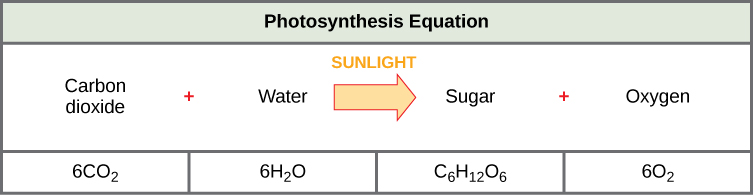
Reading: Introduction to Photosynthesis | Biology (Early Release)
Bio 180 Chap 3 Flashcards - Quizlet Label the following diagram of water molecules, indicating the location of bonds and the partial charges on the atoms. Drag the labels to their appropriate locations on the diagram of the water molecules below. Labels can be used once, more than once, or not at all. a. covalent bond b. - c. hydrogen bond d. + e. + f. covalent bond g. -

Separation Techniques in Chemistry - Practice Test Questions & Chapter ...
Water molecules and their interaction with salt - USGS Water molecules pull the sodium and chloride ions apart, breaking the ionic bond that held them together. After the salt compounds are pulled apart, the sodium and chloride atoms are surrounded by water molecules, as this diagram shows. Once this happens, the salt is dissolved, resulting in a homogeneous solution. Find out more Adhesion/cohesion

BIO 101 Biology Concepts: Notes
PDF Water - University of Texas at Austin interacting with four other water molecules in the crystal. (Only two layers of water molecules are shown here.) In liquid water, each molecule still can form hydrogen bonds with up to four other water molecules, but each bond has a lifetime of only about 10-12 s. As a result, the structure of water is continually flickering as water
Print Honors Molecular Biology Chapter 3 flashcards | Easy Notecards
PDF Properties of Water Lab: AP Biology Lab 1 ʼ - WordPress.com molecules of water are bonded together by weak hydrogen bonds. Furthermore, due to the electronegativity of oxygen, water is a polar molecule. Due to its polarity, water is classified as the universal solvent. You will investigate the life-sustaining properties of water throughout this lab. Part One: Polarity Label the diagram of water below.
What is a polar molecule? - Quora
PDF Biology STARR-EOC Review NAME - Alvin Independent School District Two green water plants were placed in separate test tubes, each containing water and bromothymol yellow. Both test tubes were corked. One ... Use the following diagram - label where energy is released and where energy is used. ... Label the following molecules in these equations (water, glucose, oxygen, carbon dioxide, ethyl alcohol) ...

Solved: Hydrogen Bonding And Water Water Molecules (H_2O) ... | Chegg.com
The Structure of Water - HealingEarth Figure 1: Water Molecule Water is a molecule (H 2 O) that contains two hydrogen atoms each sharing a pair of electrons with an oxygen atom (see Figure 1). When atoms share electrons in this way, a covalent bond is created. These bonds are essential to living organisms. In water molecules, oxygen and hydrogen atoms share electrons unequally.

Dna Molecule Drawing at GetDrawings | Free download
Answered: Drag the labels to their appropriate… | bartleby Drag the labels to their appropriate locations on the diagram of the water molecules below. Labels can be used once, more than once, or not at all. • View Available Hint(s) Reset Help (b) Group 2 H Group 1 8+ H Group 1 8- H Group 2 hydrogen bond Group 1 Group 2 covalent bond H ionic bond Group 2 Group 1 H H Question
Post a Comment for "42 label the following diagram of water molecules"